The Honolulu Chapter presented 21 ARCS Scholar Awards to exceptional doctoral students in STEM fields at the University of Hawai‘i at Manoa and announced the two ARCS Scholar of the Year recipients at the annual Scholar Awards Banquet on May 4. The $6,000 unrestricted grants provide resources for professional travel, computer and research equipment and materials, publishing costs, and/or educational and personal expenses at the recipient's discretion. Scholars of the Year received an additional $1,000 for their superior presentations at the Honolulu ARCS Scholar Symposium in April.
View photos from the 2026 Scholar Awards Banquet
View 2025 Scholars | 2024 Scholars | 2023 Scholars | 2022 Scholars | 2021 Scholars | 2020 Scholars | 2019 Scholars | 2018 Scholars | 2017 Scholars | 2016 Scholars | 2015 Scholars | 2014 Scholars | 2013 Scholars | Previous Scholars
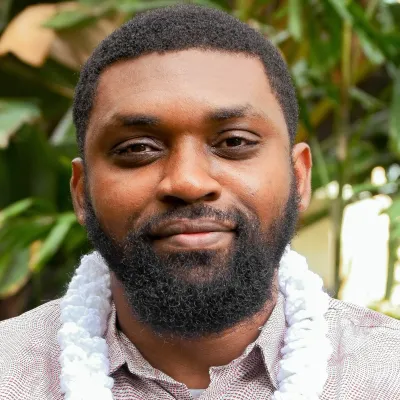
Ellen M. Koenig ARCS Award
Oceanography, Dr. Seth Bushinsky, advisor
Presentation: How Autonomous Ocean Robots Are Helping Us Understand Climate Change
With data from autonomous robot floats in the North Pacific, Charles uses computer modeling to understand how natural climate cycles and human activities influence the ocean’s ability to absorb CO2 (mitigating climate change) and O2 (supporting marine life).
Education: BTech in Marine Science and Technology, Federal University of Technology, Nigeria; MS in Marine Chemistry, Zhejiang University
Interests: Outdoor activities, soccer, learning languages, scientific outreach and mentoring
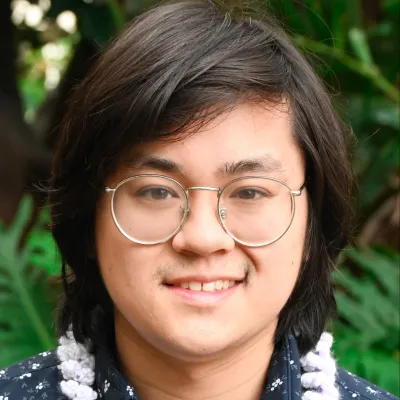
Toby Lee ARCS Award
Earth Sciences, Dr. Shuai Li, advisor
Preseentation: Modeling the Impact: Driven Loss and Transport of Water-Ice on the Moon
Jordan uses computer modeling to understand how constant bombardment of micrometeorites affects water ice in shaded craters on the moon. He also compares lunar data information about the younger ice on the relatively water-rich dwarf planet Ceres.
Education: BA in Astrophysics, BS in Engineering, Swarthmore College; MS in Earth and Planetary Sciences, UH Mānoa
Interests: Playing jazz, board games, Magic, the Gathering, historic fencing
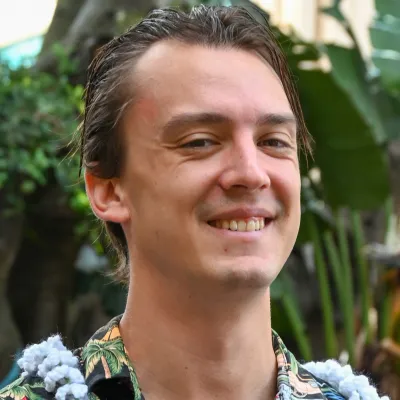
H. Keith and Sue Ernst ARCS Award
Molecular Biosciences and BioEngineering, Dr. Zhiyan Du, advisor
Presentation: Unraveling Algae and Fungi Interactions: Strategies for Carbon Sequestration
In the lab, Taren studies the complex interactions of fungi and microalgae that lead to sedimentation of large biomass particles in a liquid culture resembling conditions in the open ocean. Understanding these processes and relationships could improve future carbon sequestration efforts.
Education: BA in Molecular Biology, Pitzer College
Interests: Dungeons and Dragons, hiking, outdoor education
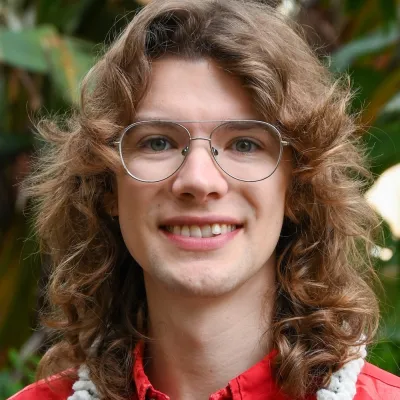
George and Mona Elmore ARCS Award
Oceanography, Dr. Jeffrey Drazen, advisor
Presentation: Cradle to Grave: Museum and Video Archives Reveal Diverse Nursery Functions of Deep-sea Corals and Sponges
Harold analyzes video captured by submersibles and DNA extracted from tissue samples in the Smithsonian coral museum to study ecosystem functions of deep-sea coral and sponge habitats and how these ecosystem engineers support communities of fish and other animals.
Education: BS in Biological Sciences, BA in Earth Sciences, University of Southern California
Interests: Snorkeling, SCUBA, biking, museums, DJ-ing
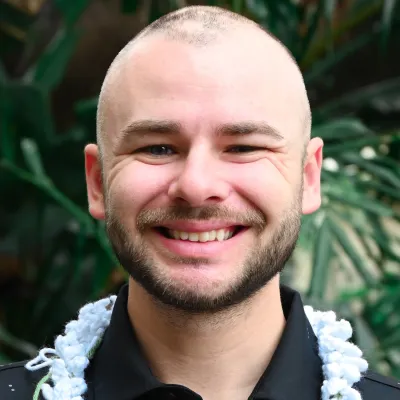
George and Mona Elmore ARCS Award
Atmospheric Science, Dr. Yi-Leng Chen, advisor
Presentation: Linking Morning Moisture Profiles to Afternoon Thunderstorms: Insights from MPD Observations in Taiwan
Cameron studies how daily patterns of wind and rain evolve over subtropical islands. He will combine MicroPulse DIAL laser observations of water vapor with computer modeling to better forecast the timing and intensity of short-term extreme rainfall in island communities.
Education: BS in Meteorology and Atmospheric Science, The Pennsylvania State University
Interests: Baseball, guitar, pickleball
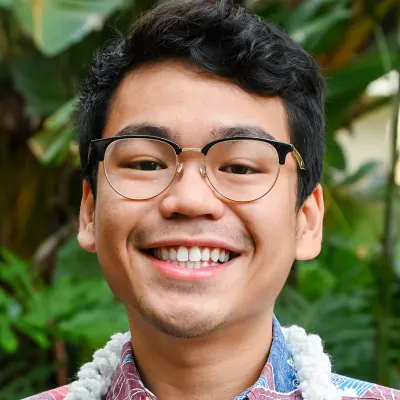
Isabella Aiona Abbott ARCS Award
Botany, Dr. Nicole Hynson, advisor
Presentation: Hidden Partnerships: How Fungi Shape the Fate of Native and Invasive Orchids
Whether increasingly rare natives or introduced varieties, all orchids depend on mycorrhizal fungi in the environment to germinate and grow. Using DNA sequencing and germination trials, Michael studies symbiotic partnerships in the soil micro-biome to form a framework for broader biodiversity questions on other Pacific Islands.
Education: BS in Integrative Biololgy, University of Guam
Interests: Hiking, gardening, painting, coastal clean-ups, teaching and mentoring students
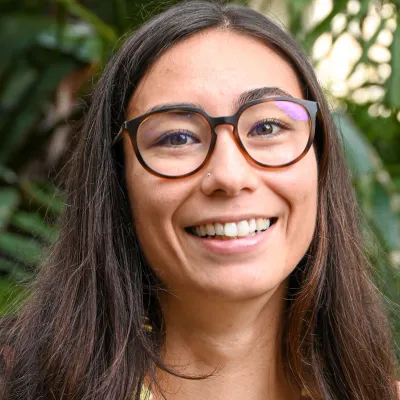
Maybelle F. Roth ARCS Award
Conservation Biology (Botany), Dr. Kasey Barton, advisor
Presentation: Investigating Non-additive Responses of ʻAʻaliʻi to Simultaneous Salinity and Drought Stress to Inform Restoration Under Climate Change
To ensure the indigenous ‘a‘ali‘i shrub (Dodonaea viscosa, Sapindaceae) endures climate change, Kauanoe collects and propagates seeds for greenhouse investigations and simulates salt and drought exposure, then assesses tolerance and morphological, physical, and anatomical traits of exposed plants.
Education: BS in Natural Resources and Environmental Management, UH Mānoa
Interests: Running, ultimate, botanizing
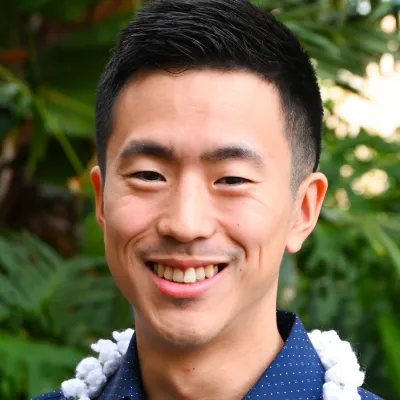
Ellen M. Koenig ARCS Award
Information and Computer Sciences, Dr. Peter Sadowski, advisor
Presentation: Enhancing Weather Forecasts over the Hawaiian Islands with Artificial Intelligence
Hawai‘i’s complex topography creates multiple microclimates, making it difficult to predict rainfall with a high degree of accuracy. Yusuke uses artificial intelligence to identify complex patterns in historical observations (including 70,000 hourly time stamps over eight years) so weather diffusion models can make more reliable forecasts.
Education: BS, MS in Computer Science, UH Mānoa
Interests: Chess, traveling, cooking
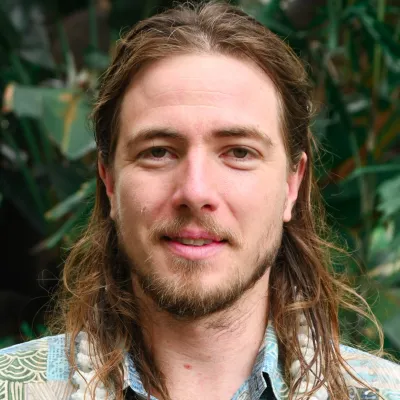
Bretzlaff Foundation ARCS Award
Civil and Environmental Engineering, Dr. Tao Yan, advisor
Presentation: Ensuring Water Security with Better Methods for Detecting Saltwater Leaks into Sewer Pipes
Erik works on inexpensive, simple-to-build, and easy-to-deploy autonomous floating sensors that can be paired with numerical models to quickly and efficiently identify when and where leaks occur so that cost-effective repairs can be made.
Education: BS, MS in Environmental Engineering, California Polytechnic State University San Luis Obispo
Interests: Diving, surfing, skating, hiking, cooking, learning
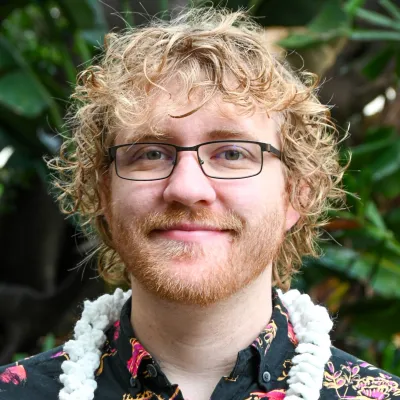
Geroge and Mona Elmore ARCS Award
Astronomy, Dr. Ben Shappee, advisor
Presentation: Time Domain Astronomy: Near and Far
Willem is interested in astronomical phenomena that occur over human timescales. That includes both interstellar objects (he examines the chemical makeup of nearby comets for hints on conditions where they were formed) and dying stars far away (changing color in ultraviolet readings over the course of a month has eliminated one theorized scenario for how they were produced).
Education: BS in Physics and Mathematics, Calvin College, MS in Astronomy, UH Mānoa
Interests: Hockey, hiking, trivia
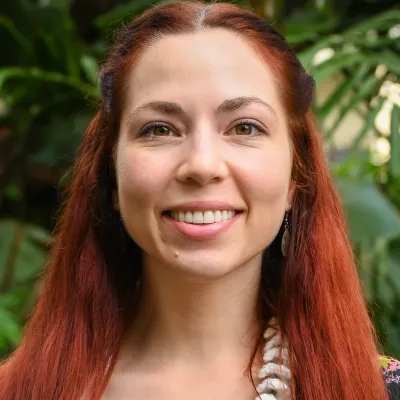
Sarah Ann Martin ARCS Award
Zoology, Dr. Robert Richmond, advisor
Presentation: Fighting Plastic with Microbes: Can Coral Microbiomes Help Reefs Survive
Plastic microfragments cause physical and chemical harm to corals and their microbiomes. Mack is screening coral-associated microbes for their ability to consume and neutralize ubiquitious polyethylene terephthalate plastic esters with an eye to creating probiotic interventions.
Education: AS in Biological Sciences, Kapi‘olani Community College; BFA, Cornish College of the Arts
Interests: Playwrighting, directing, costume design; biking, hiking, snorkeling, dog play
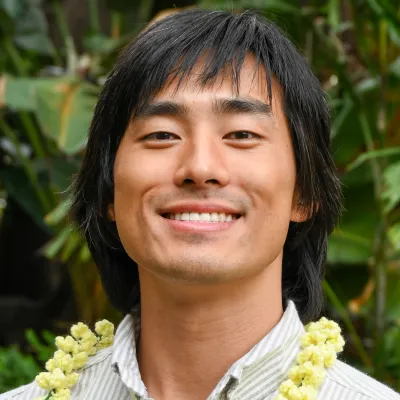
Sarah Ann Martin ARCS Award
Chemistry, Dr. Marcus Tius, advisor
Presentation: A Simple Synthesis of Flavaglines
Duk is working on a synthetic version of a natural plant compound called rocaglimide, which shows promising anti-cancer and anti-inflammatory properties. He developed an efficient and scalable way to synthesize a precursor molecule in a typical organic chemistry laboratory with inexpensive and widely available chemicals; derivatives are being evaluated at Memorial Sloan Kettering Cancer Center.
Education: BS in Biology, UH Hilo; MS in Chemistry, UH Mānoa
Interests: Weight lifting, cooking
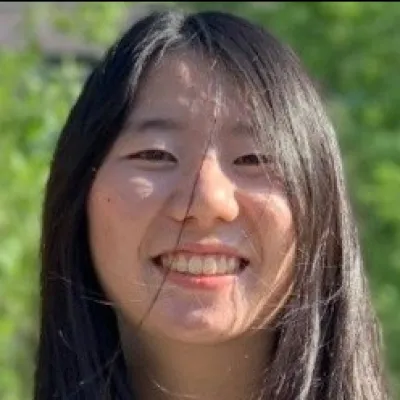
Columbia Communications ARCS Award and Jane and Dan Katayama ARCS Scholar of the Year Award
Astronomy, Dr. Michael Connelley, advisor
Presentation: Enhancing the Efficiency of All Observatories with Adaptive Optics
Ellen works on a new type of adaptive secondary mirror — or ASM — to counter distortions from turbulence in telescope observations. She has shown that the ASM can double sensitivity of scientific observations and is working to automate observing and calibration procedures so it will be simpler to use and available to more telescopes.
Education: BS in Engineering Physics, Cornell University; MS in Astronomy, UH Mānoa
Interests: Hiking, snorkeling, playing in the waves and snow, seeing nature, baking cakes with friends, learning new things
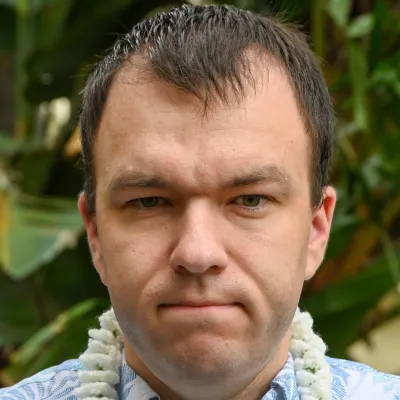
Dr. Jacqueline Maly ARCS Award
Physics, Dr. Philip von Doetinchem, advisor
Presentation: Modeling Cosmic Ray Antideuteron Production with the NA61/SHINE Experiment
Bobby studies proton collisions in the NA61/SHINE experiment at the CERN particle accelerator in Switzerland to build a model for resulting antimatter formation. This will help constrain the astrophysical background in the search for possible dark matter signatures.
Education: BS in Physics, UC Santa Barbara; MS in Physics, UH Mānoa
Interests: Chess, golf, hiking
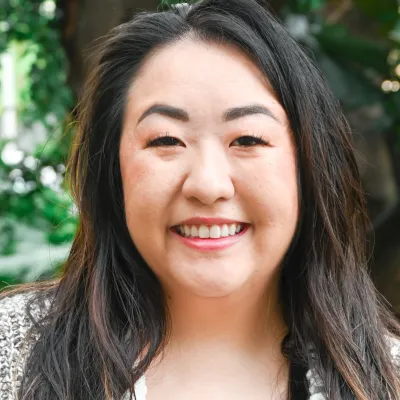
Guy Moulton Yates ARCS Award
Anatomy, Biochemistry, and Physiology, Dr. Yukiko Yamazaki, advisor
Presentation: Effects of RGD Peptide on Antral Follicle Development in Three-dimensional Ovarian Tissue Culture Supported by Dextran Hydrogel
Cassandra developed a culture system that allows ovarian tissue to grow in lab conditions mimicking the human ovary. Understanding how bioactive factors affect ovarian development could help improve fertility treatments and expand options for cancer patients and others at risk of infertility.
Education: BA in Biology, MS in Developmental and Reproductive Biology, UH Mānoa
Interests: Hiking, paddling, Pilates, yoga, new restaurants, crafting, sewing, friends and family
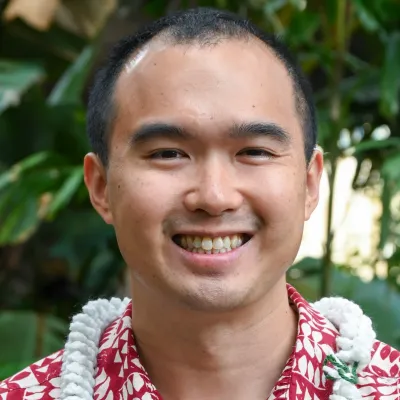
Frederick M. Kresser ARCS Award
Mechanical Engineering, Dr. Michael Krieg, advisor
Presentation: Developing Autonomous Underwater Vehicles in Hawaiʻi
Acoustic waves, which allow GPS to pinpoint locations on land, donʻt function so well underwater. Patrick works on custom firmware to test theoretical control methods in real-world underwater vehicles and helps design underwater robotic systems, running trials at a permanent test site off Kaka‘ako.
Education: BS, MS in Mechanical Engineering, UH Mānoa
Interests: Computer programming, weightlifting, classical literature
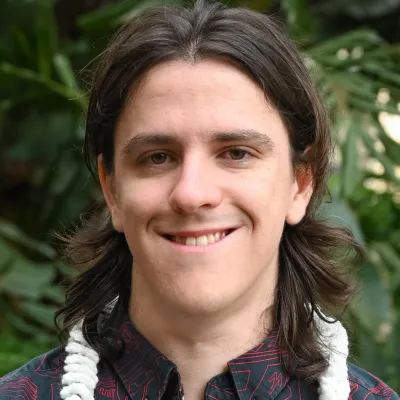
Sarah Ann Martin ARCS Award
Mathematics, Dr. Asaf Hadari, advisor
Presentation: Thurston’s World of Surfaces and Pseudo-Anosov Maps
Topology studies the intrinsic properties of geometric shapes and spaces that remain unchanged under constant deformation such as by stretching, bending, twisting, folding. Kawika uses functions to study objects by how they relate to others and themselves, with particular focus on interesting but complicated pseudo-Anasov maps. He is also interested in models used to develop phylogenetic trees, the branching graphical representations of evolutionary relationships.
Education: BA in Mathematics, UH Mānoa
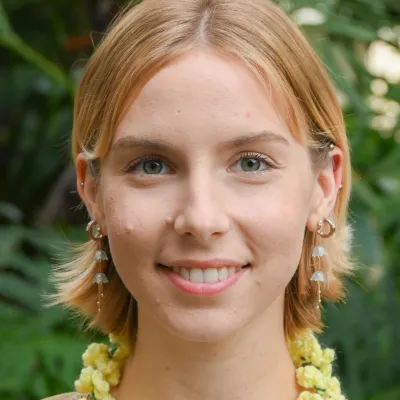
Poorman Hoyt Stratford Foundation Award
Earth Sciences, Dr. Bin Chen, advisor
Presentation: High Pressure Phase Stability and Thermo-elastic Properties of Brucite Mg(OH)2
Juliana recreates extreme mantle pressures and temperatures in the lab to study how brucite—a water-rich mineral in oceanic rocks—behaves as slabs sink into Earthʼs mantle, where release of water can trigger melting and volcanic formation. The results could help explain deep water transport, melting, earthquakes, and unusual seismic signals.
Education: BS in Earth and Planetary Science, Purdue Univer-sity; MS in Earth and Planetary Science, UH Mānoa
Interests: Surfing, painting, running with my dog, swimming, conservation volunteering, thrifting
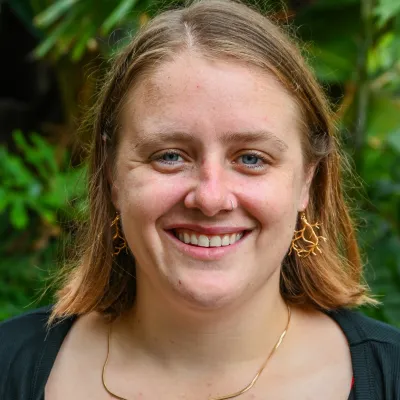
ARCS Honolulu Chapter Award
Marine Biology Graduate Program, Dr. Rob Toonen, advisor
Presentation: Coral Adaptive Potential on Hawaiian Reefs: The Role of Genetic and Environmental Interactions
Applying “seascape genetics” to the most extensive O‘ahu coral sampling project to date (640 samples collected from 194 sites over 120 days), Sam pairs DNA and genomic analysis of rice, prickly lace, and finger corals with nine environmental and human-caused factors to assess adaptive potential. She hopes to identify climate-resilient coral populations for conservation and restoration efforts.
Education: BS in Marine Science and Biology, University of Miami
Interests: Digital design, art, snorkeling, SCUBA, science communication, outreach
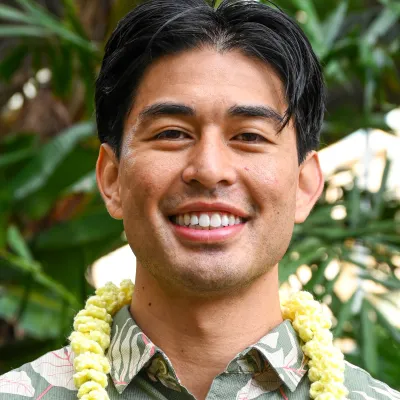
George and Mona Elmore ARCS Award
Cell and Molecular Biology, Dr. Jesse Owens, advisor
Presentation: Development of PiggyBac Transposase as a Genome Insertion Tool
Current gene therapy tools have limitations. The piggyBac enzyme can insert longer gene strings without damaging the DNA strand. Christopher attaches binding proteins called zinc fingers to a modified version of piggyBac to “chaperone” healthy genes to the desired location for safer, more precise gene-delivery.
Education: BS in Chemistry, California State University Channel Islands; MS Cell and Molecular Biology, UH Mānoa
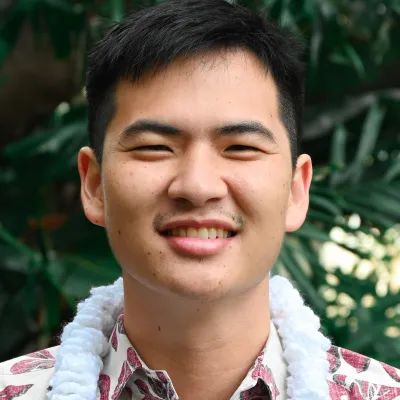
Helen Jones Farrar ARCS Award and Dr. Jacqueline Maly ARCS Scholar of the Year Award
Plant and Environmental Protection Sciences, Dr. Brent Sipes, advisor
Presentation: The Kona Coffee Root-knot Nematode: An International Threat
Plant-parasitic nematodes are microscopic non-segmented round worms that cause billions of dollars in damage to crops. Landon is improving the description of taxonomic traits of tropical species that attach coffee and identifying plant genes that confer resistance to them. The goal is to improve rapid identification of the pests and develop sustainable methods for managing them.
Education: BS in Tropical Agriculture and the Environment, MS in Tropical Plant Pathology, UH Mānoa
Interests: Nematode hunting, bird watching, surfing, fishing, ceramics